Clay Face Mask for Men: Best Types, Benefits, and Usage Guide
In the realm of modern men's grooming, the clay face mask has emerged as a cornerstone for achieving a healthy, refined complexion. Its ability to perform deep pore cleansing, effectively detoxify the skin, and revitalize skin texture is truly remarkable.
If you're grappling with excess sebum, acne breakouts, or simply seeking to enhance your skin's overall clarity, a clay facial mask can be a transformative addition to your regimen. Urth’s comprehensive guide will navigate the diverse landscape of clay face mask variants, their respective benefits, and provide actionable insights on selecting the best clay mask for your specific skin needs.
Key Takeaway: Clay face masks leverage natural earth minerals to draw out trapped sebum, debris, and environmental toxins from pores. Choosing between Kaolin, Bentonite, or French Green clay allows you to balance deep oil absorption with skin hydration and sensitivity.

Mechanism of a Clay Face Mask
A clay face mask leverages the absorptive properties of natural clays to extract impurities from the skin's surface and underlying pores. These impurities are made up of excess sebum, debris, and environmental toxins.
This extraction process decongests pores, mitigates shine, and prevents blemishes. For men, whose skin is often oilier with larger pores, the benefits of a clay facial mask are particularly pronounced.

Elements of Clay Face Masks and Their Primary Functions
-
Derived directly from naturally occurring earth minerals.
-
Primary function is to absorb and draw out deeply embedded skin impurities.
-
Can be applied as a targeted spot treatment for breakouts or as a full-face mask.
Types of Clay Masks and Their Skin Benefits
Key Benefits of a Clay Face Mask for Men
-
Deep Dermal Cleansing: Effective removal of dirt, excess sebum, and environmental pollutants.
-
Detoxification of Pores: Extraction of stubborn toxins and unclogging of follicular orifices.
-
Hydration and Soothing: Select formulas offer moisturizing properties while alleviating dermal irritation.
-
Exfoliation of Stratum Corneum: Gentle removal of dead skin cells for enhanced skin radiance.
-
Pore Minimization: Noticeable tightening of the skin and reduction in visible pore size.
How to Use a Clay Face Mask Step-by-Step
-
Cleanse First: Wash your face thoroughly with a gentle men's face wash to remove surface oil.
-
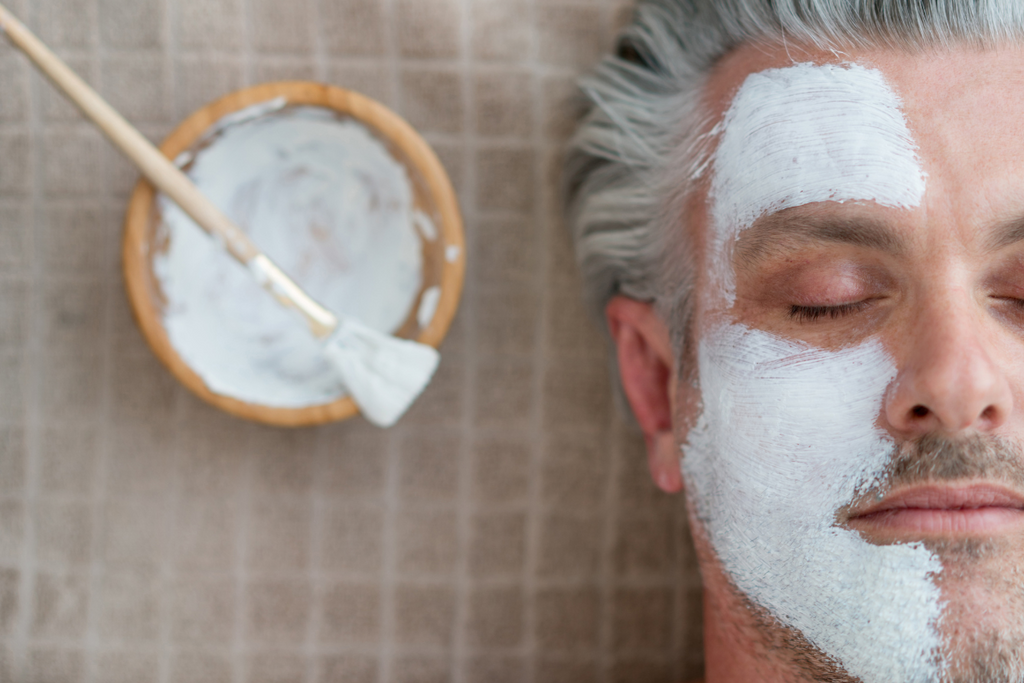
Apply Evenly: Apply a thin, uniform layer of the clay mask evenly across your face and neck, avoiding the delicate eye area.
-
Allow to Work: Leave the mask on for 10–15 minutes until it is dry to the touch.
-
Rinse Thoroughly: Rinse completely with warm water, using gentle circular motions to assist removal.
-
Moisturize: Follow up immediately with an antioxidant moisturizer to lock in hydration and protect the skin barrier.

How Often to Use a Clay Face Mask
-
General Rule: A frequency of 1 to 3 times per week is generally recommended, contingent on your individual skin type and seasonal needs.
-
Hydrating Clay Masks: May be used more frequently depending on skin tolerance.
-
Exfoliating Clay Masks: Should be used less frequently (1–2 times per week) to avoid over-exfoliation.
Potential Side Effects & Safety Precautions
While clay face masks are generally safe, it is important to perform a patch test before applying them to your entire face,especially if you have sensitive skin. Possible side effects include:
-
Dryness: If your skin tends to be dry, opt for a moisturizing clay mask formula to avoid over-drying.
-
Irritation: Sensitive skin types should always patch-test clay masks behind the ear or on the inner arm before facial use.
-
Allergic Reactions: If you notice sudden redness, burning, or swelling, discontinue use immediately.
Frequently Asked Questions (FAQs)
What is the best clay mask for men with sensitive skin?
Kaolin clay is the gentlest and most well-tolerated clay option for sensitive skin, absorbing oil without stripping essential moisture.
How frequently should a bentonite clay mask be used?
A frequency of 1 to 2 times per week is generally recommended for bentonite clay masks due to their deep absorptive capacity.
Can clay masks effectively address comedones (blackheads)?
Yes, clay face masks aid directly in the decongestion of pores, absorbing excess oil plugs and reducing the appearance of blackheads on the nose and face.
Why Choose Urth's Botanical Resurfacing Mask?
When selecting a clay mask engineered specifically for men's skin, Urth Skin Solutions offers a targeted solution.
Our Botanical Resurfacing Mask is a clarifying and renewing clay face mask formulated with mineral-enriched bentonite and kaolin clays to absorb excess oil, reduce blackheads on the nose, and alleviate redness on the face for a clear,refreshed complexion.
This cooling clay mask is infused with ginseng, ginkgo, chamomile, sugar cane extract, lactic acid, and salicylic acidto detoxify, gently exfoliate, and revitalize dull skin. Perfect for all skin types—including men with sensitive, dry,combination, and oily skin—it is an essential "must-have" for an elevated men’s skincare routine.